ServicesWell Water Filtration
Well Water Filtration and Treatment in Bastrop, TX
Your well water should taste clean and leave fixtures alone. We test it first, then fit filtration around the well equipment and older plumbing already in your home, so you get the right fix without buying parts you don't need.
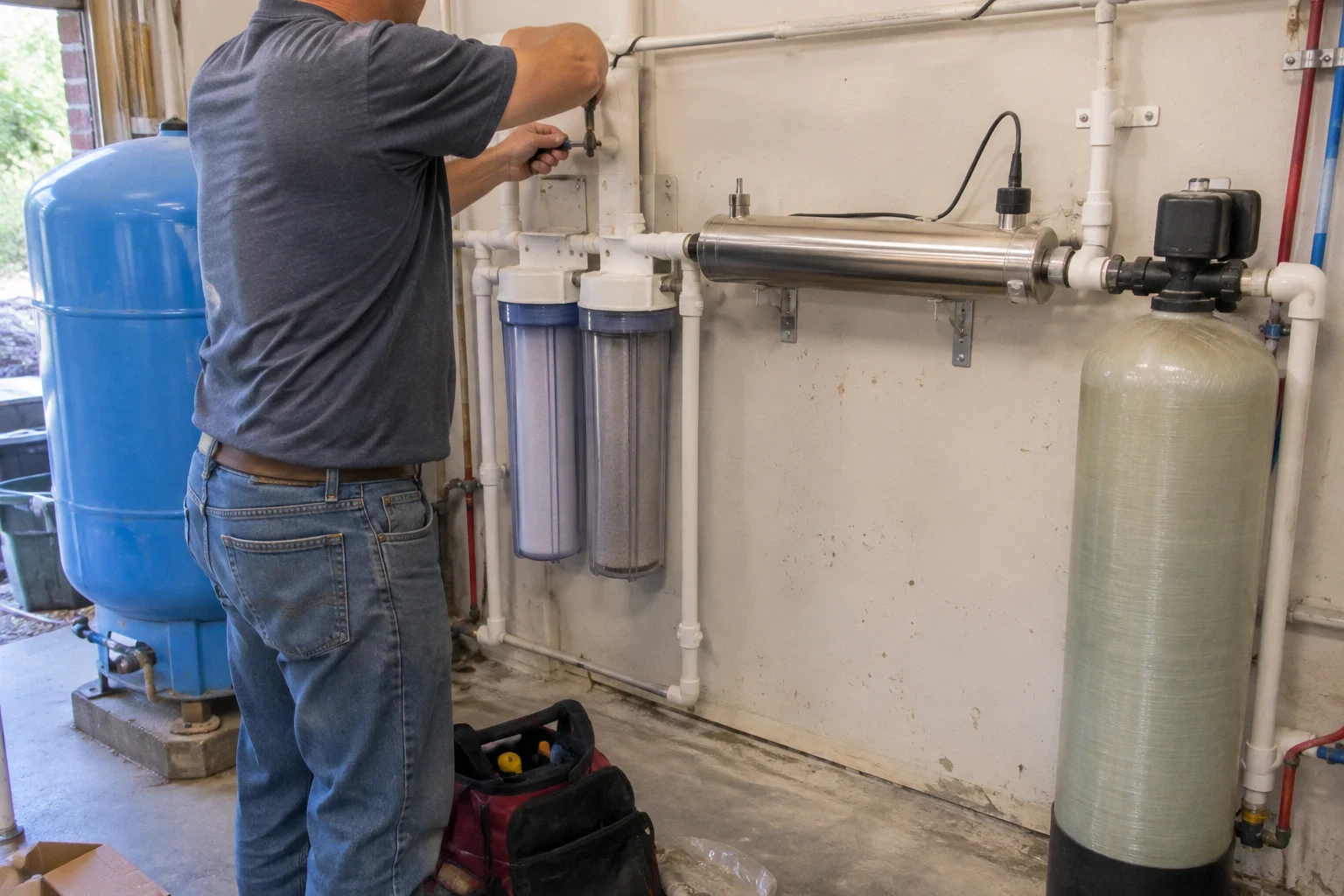
Filtration that starts with your water
Private well water changes from one property to the next, and sometimes from one season to the next. Two neighbors on the same road can have very different water. That is why we never pick a system before we know what is coming out of your tap. A free water test tells us about hardness, iron, sulfur, sediment and pH, and whether anything points to a need for a closer lab look.
Older wells add their own wrinkles. We often find a pressure tank that has lost its air charge, a sediment cartridge nobody has changed in years, or a filter housing a past owner bypassed with a length of pipe. We look at all of it, because a new system only works as well as the setup feeding it.
Once we know your water and your equipment, we recommend the smallest setup that solves the problem. Some homes need one sediment filter. Others need several stages working together.
What our well water work includes
- A free water test
- We check the water at your tap and explain each result in plain terms. If a reading calls for a closer look at an outside laboratory, we say so instead of guessing.
- A look at the well equipment
- We check the pressure tank, the pressure switch reading and any old filters on the line. Low pressure or short cycling changes which system will work for you.
- Sediment and carbon stages
- Sand, grit and rust flakes are common from wells. A sediment stage protects everything downstream, and carbon handles taste and odor.
- Targeted treatment where needed
- If the test shows iron or a rotten-egg smell, we add the right stage for it, covered in more detail on our Iron and Sulfur Removal page. UV Water Purification can be added when bacteria is a concern.
- Free installation
- We offer free installation. That covers mounting, plumbing in a bypass valve, and connecting a drain line if the system needs one.
- A tidy finish and a quick lesson
- Before we leave, the space around your new system is swept and clear. We point out the bypass valve, how to use it, and which filter will need you first.
Signs your well water needs attention
Rust marks on porcelain
Reddish-brown streaks in the toilet bowl or along the tub drain are a common iron giveaway. The same iron yellows white laundry and builds up on fixtures over time.
A rotten-egg smell
A sulfur odor, often strongest on the hot side, usually means hydrogen sulfide or a reaction inside an older water heater.
Grit in faucet screens
Sand clogging aerators and the inlet screens on your washer or dishwasher means nothing is catching it before it reaches the house.
Cloudy or off-tasting water
A metallic, earthy or flat taste is worth testing, especially if it shifted after a heavy rain or a long dry stretch.
Crust on showerheads
White buildup on showerheads and inside kettles points to hard water, which also wears down a water heater faster.
Filters with no history
If the house came with filters already installed and no one can tell you when they were last changed, a test and a fresh look are a smart first step.
What moves the cost
Well filtration costs depend almost entirely on what your test shows and what your current setup looks like. A home with one simple issue costs far less than one with iron, sulfur and sediment together. We walk through each line item before any work starts.
Number of treatment stages
One sediment filter is a small job. Water that also needs iron, sulfur or bacteria treatment needs more equipment.
Flow and household size
A bigger household or several bathrooms needs a system sized to keep up without dropping pressure.
Condition of existing plumbing
Corroded galvanized pipe, old fittings or a bypassed housing may need repair before a new system goes in.
Space and drain access
Backwashing systems need a nearby drain. A tight utility closet or a long run can add parts and time.
How a well water job runs
- 1
Your phone call
Tell us what you notice, from smell to stains to low pressure. We set a time for your free water test.
- 2
Testing and inspection
We test the water and look over the well equipment and plumbing in your home. You see the results with us, not later in a sales pitch.
- 3
A clear recommendation
We explain what each stage would do and why it is on the list. You get a quote by phone or in person, and you decide with no pressure.
- 4
Installation day
We shut the water off only as long as needed, install the system with a bypass, then flush and check for leaks. Most homes have water back the same visit.
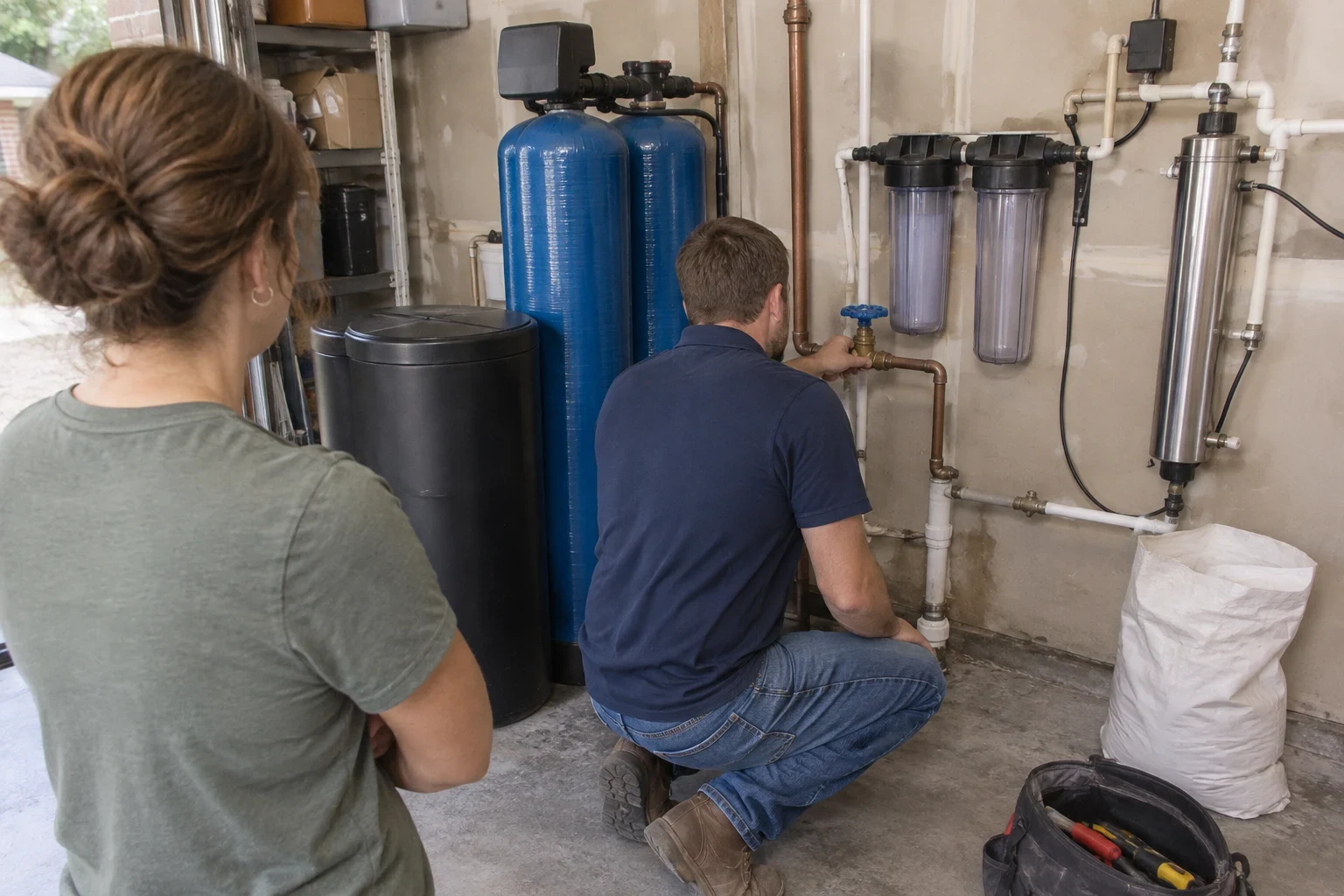
Well water filtration questions
Do I really need a test before buying a system?
Yes. Without a test, it is easy to pay for treatment you don't need or miss the thing causing the problem. Our water test is free, and it shapes everything we recommend.
Will adding filtration make my showers weaker?
It shouldn't, as long as the system is sized for the flow your household uses. On older wells, weak pressure usually traces back to a pressure tank that has lost its air charge or an old cartridge packed with sediment. We rule those out before we size anything new.
How long do the filter stages last before I swap them?
That comes down to what your well puts out and how much water your household runs through it. A sandy well can load up a sediment cartridge quickly, while a carbon stage usually lasts longer. We set a replacement schedule from your own test results, not a generic chart.
My house is older with original plumbing. Is that a problem?
Not usually, but we check it closely. Older galvanized lines can shed rust that looks like a well problem, and past repairs sometimes leave odd connections. We tell you what we find before recommending anything.
Can you help with bacteria in well water?
If a lab test shows bacteria, UV purification is often the right answer, installed after sediment filtration so the light can work properly. We explain the options once the results are in.
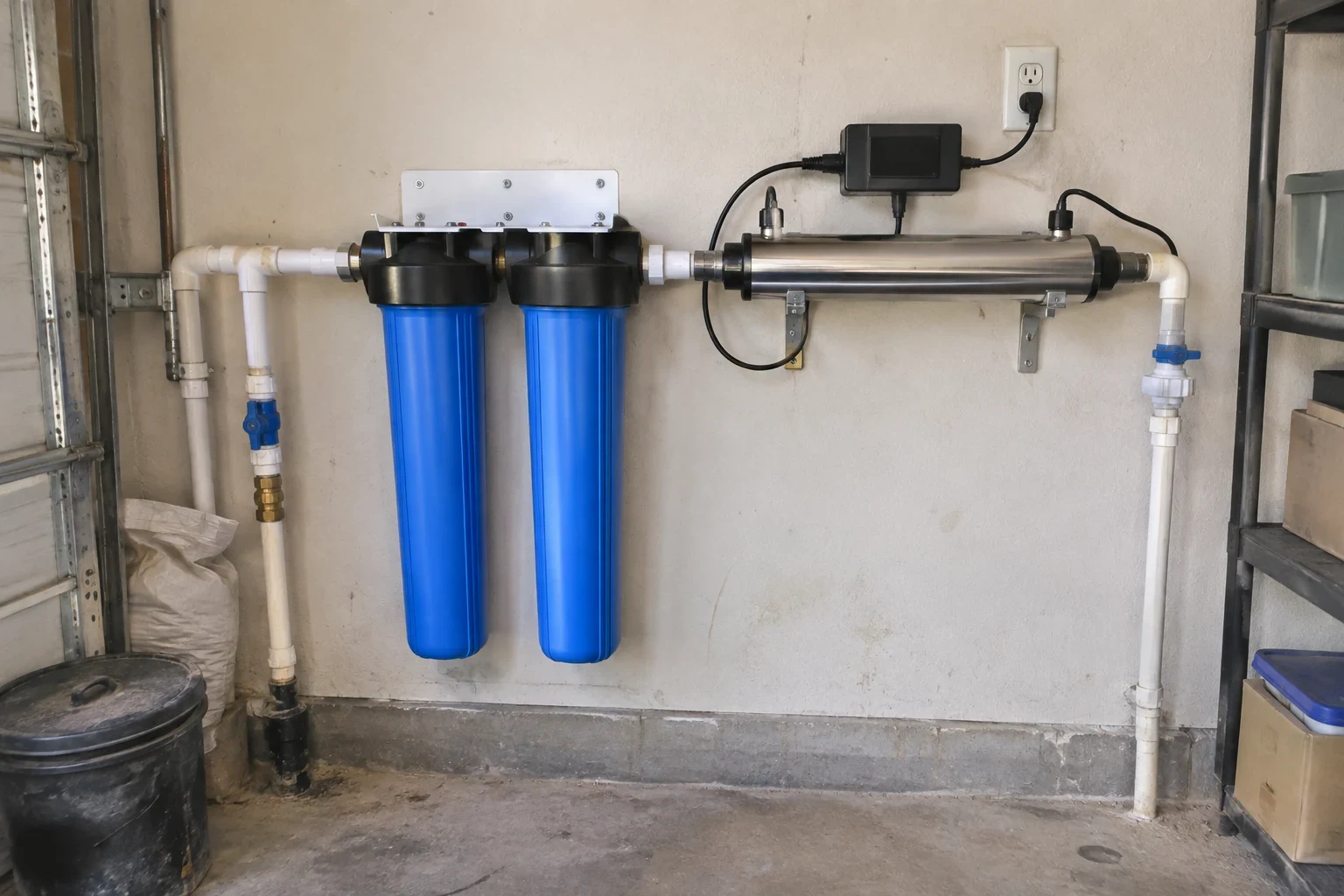
Find out what is in your well water
A free water test is the easiest place to start. We will look at your water and your equipment, and tell you plainly what would help.