ServicesUV Water Purification
Bastrop UV Water Purification
Ultraviolet light treats all the water coming into your house, leaving bacteria and other microorganisms unable to multiply. We start with a water test, check the plumbing the system will tie into, and size the unit to work properly in an older home.
What UV treatment does, and what it doesn't
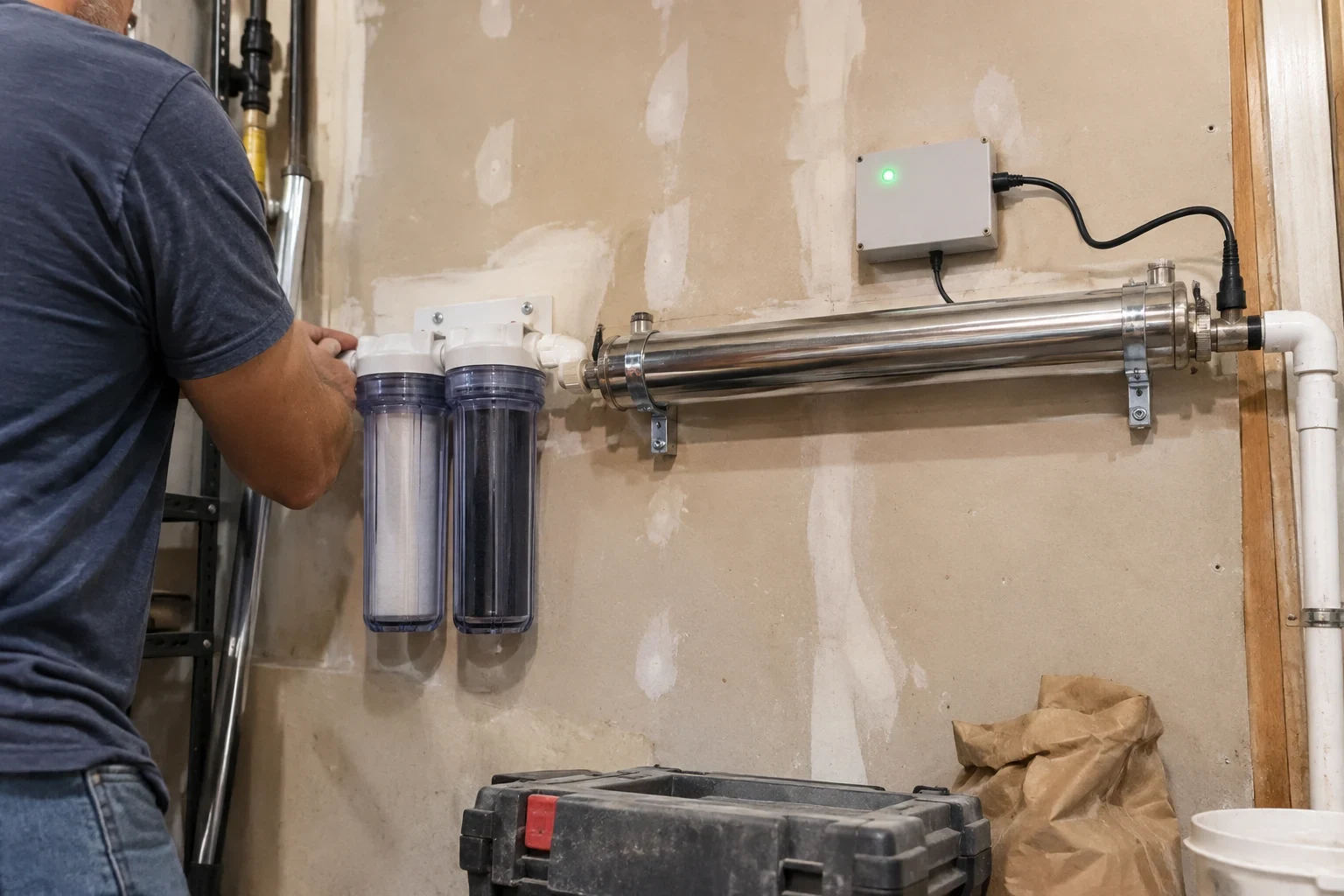
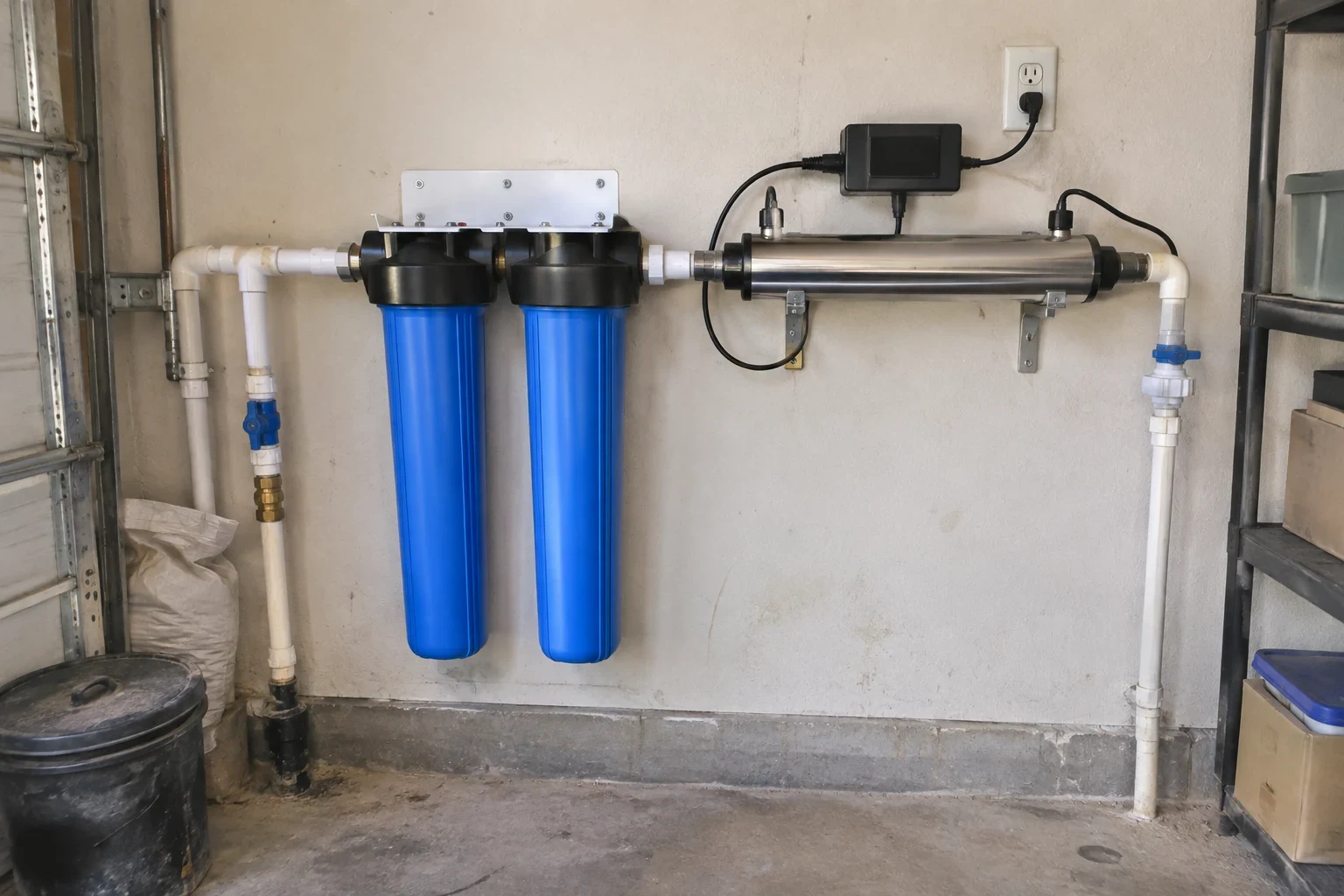
Inside a UV purifier, water runs through a metal housing past an ultraviolet bulb protected by a see-through quartz tube. As it flows by, the light damages the DNA of bacteria, viruses and cysts like giardia, leaving them unable to multiply or make you sick. Nothing gets added to your water. Taste and smell stay the same, and no water goes down the drain as waste.
It's important to know what UV leaves alone. Chlorine, lead, iron, sediment and hardness all pass straight through. Cloudy or iron-heavy water can also shade microbes from the light, which is why most systems need a sediment filter ahead of them, and sometimes iron and sulfur removal or a softener too. Our free water test tells us which of those you need, so you aren't sold equipment your water doesn't call for.
Older houses add their own wrinkles. We often find a previous owner's UV unit with a lamp that quit years ago, a bypass valve left open after a repair, or a stretch of galvanized pipe shedding rust that would cloud the sleeve. We sort those out as part of the job.
What's included with a UV system
- 01
A water test before anything else
We check for bacteria along with the things that interfere with UV: iron, manganese, hardness and turbidity. The results decide how the system is set up.
- 02
Sizing to your real flow
A UV unit only works at or below its rated gallons per minute. We size it for the moment the shower, washer and kitchen tap all run at once, not an average day.
- 03
The right prefiltration
Nearly every install gets a sediment filter so the quartz sleeve stays clear. If the test shows iron or heavy scale, we explain what else belongs upstream and why.
- 04
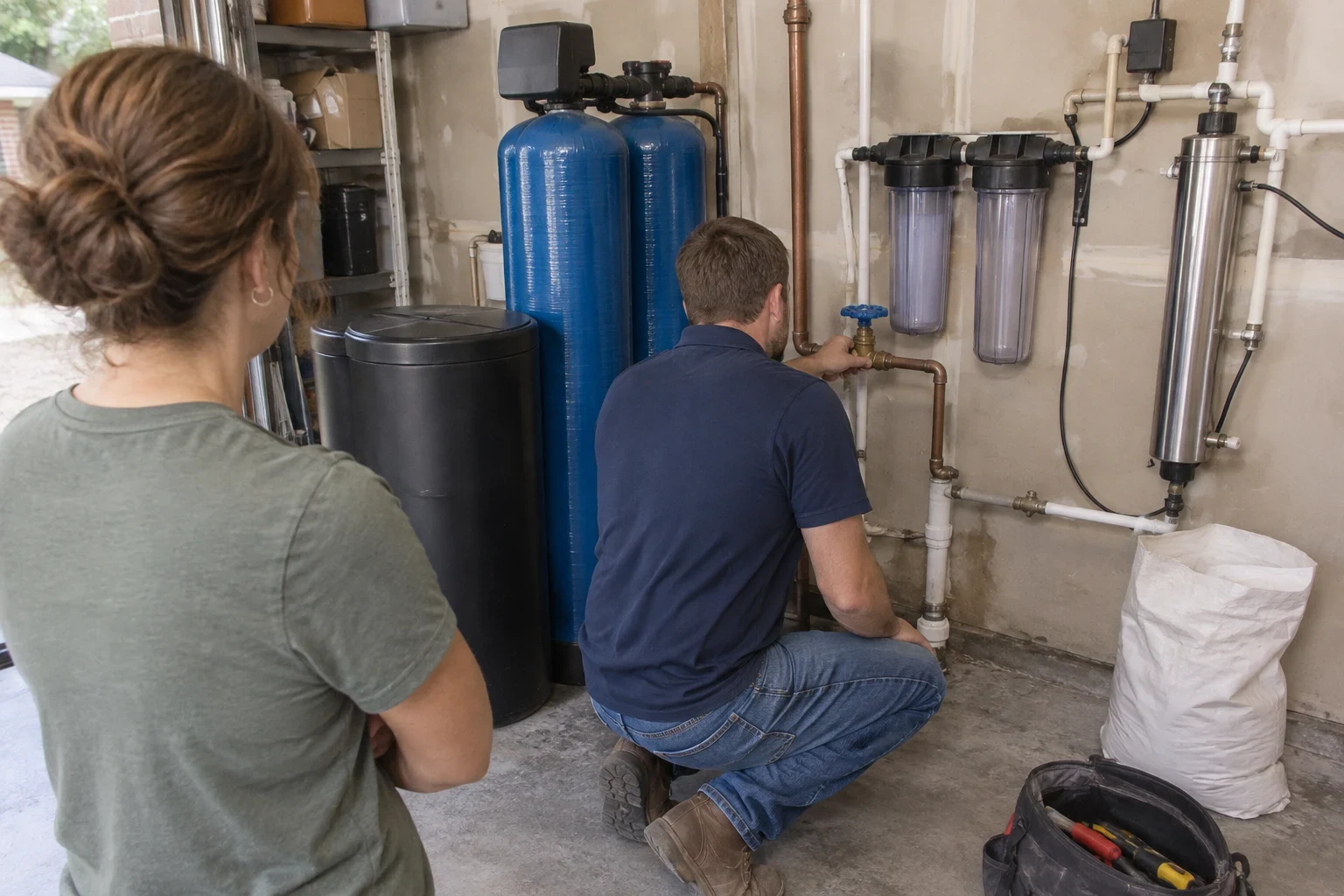
Installation at the main line
We put the system where water enters your home, with a bypass loop so future service doesn't leave you without water. We also confirm a grounded outlet is close by. Free installation is part of our offer.
- 05
Sanitizing the pipes downstream
UV treats water as it passes, but it can't reach microbes already living in your pipes and water heater. After the install we sanitize and flush the lines so you start clean.
- 06
A walkthrough before we leave
We show you the lamp alarm, how to swap the prefilter and when the lamp is due. You'll know what the unit needs without having to guess.
Questions about UV Water Purification?
Call(512) 852-4359Signs a UV system may be right for your home
A test came back positive for coliform
Coliform bacteria in a sample is the clearest reason to look at UV. We'll retest, look for where it's getting in, and talk through whether UV is the fix.
An old UV unit that's gone dark
Plenty of older homes came with a UV system nobody has touched since the sale. If the light is off, the alarm is beeping or you can't find a lamp date, it isn't protecting anything.
Recent plumbing work or a long-vacant house
Opened lines and water that sat still for months give bacteria a chance to settle in. A test and a sanitized system put that question to rest.
An odor that comes and goes
A musty or earthy smell at some taps but not others can point to bacterial growth in the lines. It can also be something else entirely, and the test will tell us which.
A boil notice left you uneasy
Some families want a second layer of protection at the main line after a notice. We'll be honest about whether your water results support it.
How a UV install goes
- 1
Your free water test
You reach us by phone and we set a time to collect samples at your home. We go over the results with you in plain terms and recommend only what the numbers support.
- 2
A look at the plumbing
We find the main line and check the pipe material, the space around it and the nearest outlet. Any old equipment on the line gets inspected, and we tell you whether it stays, gets repaired or comes out.
- 3
Installation day
We let you know before we shut the water off, then cut in the prefilter, UV chamber and bypass. Drop cloths go down, and we clean up the work area when we're finished.
- 4
Sanitize, flush and show you around
We sanitize the lines, flush each fixture and confirm the lamp is running. Then we walk you through the alarm, filter changes and the yearly lamp swap.
What affects the cost of UV purification
Two UV systems can look alike and price out very differently once your water and plumbing are factored in. After the water test and a look at the line, you get a written quote by phone that lists each part. Free installation applies, so the main variables are the equipment itself and what your house needs to support it.
- Flow rate and unit size
- The more fixtures that can run at the same moment, the higher the gallons-per-minute rating the chamber and lamp have to carry. Going too small saves little at the start and lets water slip through untreated during busy mornings.
- How much prefiltration your water needs
- A single sediment filter is the simplest setup. Iron, manganese or hard water may call for added treatment ahead of the UV.
- The condition of existing plumbing
- Galvanized sections, corroded valves or a cramped utility closet can mean extra fittings and repiping at the connection point.
- Removing or reworking old equipment
- Pulling out a dead UV unit or an abandoned filter housing adds some time, but it keeps the new system from sharing the line with parts that no longer work.
Common questions about UV purification
Does UV change how my water tastes?
No. The light adds nothing and removes nothing, so taste and odor stay as they are. If chlorine taste is the complaint, whole-home filtration or reverse osmosis at the kitchen sink deals with it, and both can work alongside UV.
Will UV take out lead or chemicals?
No. UV works only on living microorganisms. For lead from older pipes, we generally suggest reverse osmosis for drinking and cooking water, and your water test shows whether it's worth it.
How often does the UV lamp need replacing?
Expect to replace it about once a year, which is roughly how long a standard lamp is rated to run around the clock. A lamp may still light up after its output is too weak to work, so go by the install date or the unit's alarm rather than how it looks. The swap only takes a few minutes, and we show you how before we go.
What if the power goes out?
The lamp runs on electricity, so water used during an outage goes untreated. When power returns, let the lamp warm up for a few minutes, then run your taps to flush out anything that got through.
Can UV be added alongside older equipment in my home?
Most of the time, if the main line has space and the current parts are in fair condition. We inspect that equipment at the visit and tell you straight if anything should be replaced first.
Find out if UV belongs in your home
The water test answers the big question first: whether you need UV at all, and what has to go ahead of it. We'll walk you through the results and give you a clear quote by phone.