ServicesIron and Sulfur Removal
Iron and Sulfur Removal in Bastrop, TX
Orange rings in the toilet, rusty laundry, or water that smells like rotten eggs. We test your water, check the pipes and water heater, and tell you plainly what is causing it. Then we fit a system that removes the iron and odor at the source.
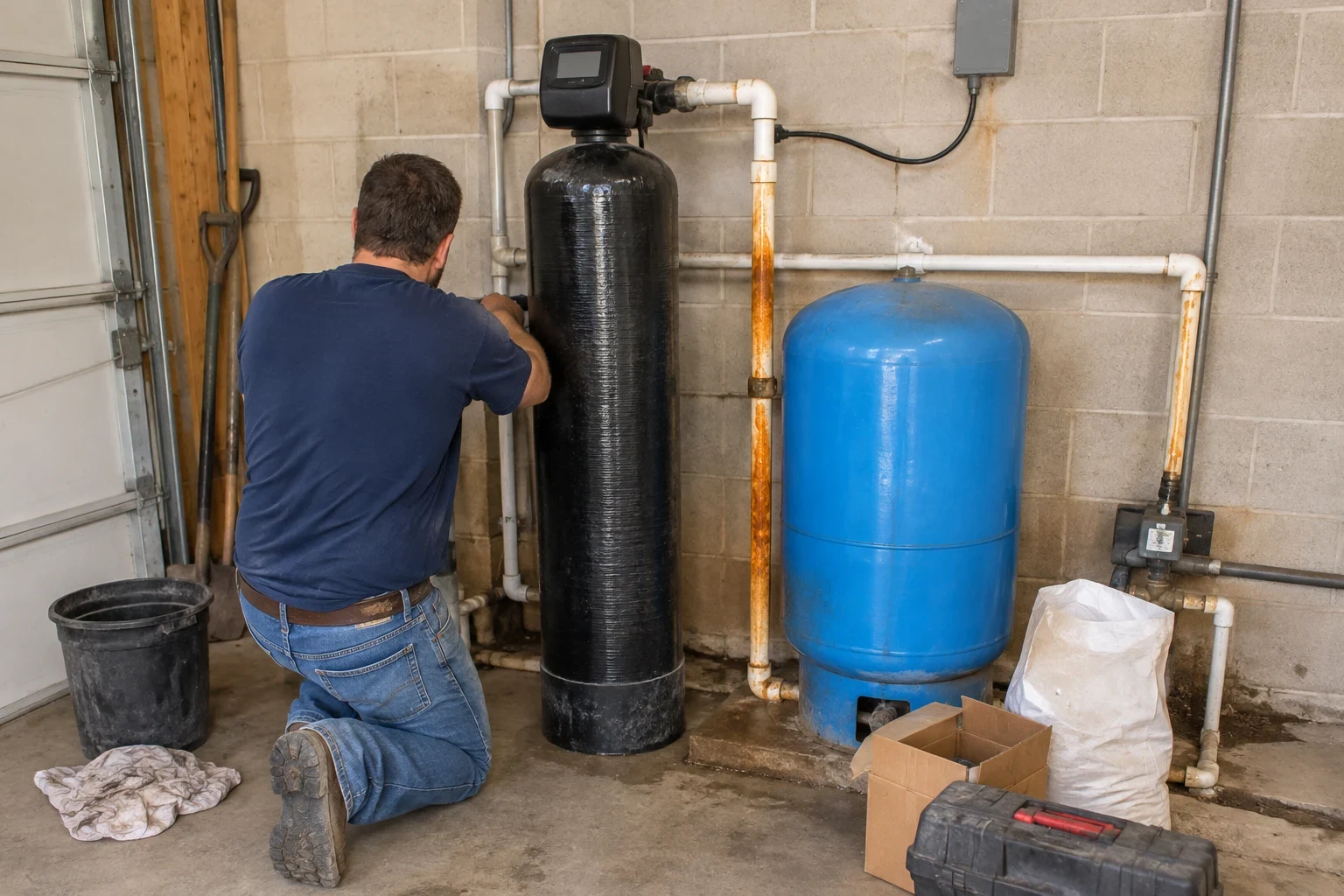
Stains and smells have a cause we can find
Iron leaves reddish-brown stains on sinks, tubs and white clothes, and it can give water a metallic taste. Sulfur, usually hydrogen sulfide gas, makes that rotten-egg smell. Both are common, both are fixable, and neither should be guessed at.
In an older house the problem is not always in the water itself. Aging galvanized pipe can shed rust from the inside, and a water heater with a worn anode rod can create a sulfur smell that only shows up on the hot side. Earlier repairs that mixed pipe types can add to it. That is why we check the plumbing as well as the water before we suggest any equipment.
When the test shows iron or sulfur coming in with the supply, an oxidizing filter is usually the answer. It turns dissolved iron and sulfur into particles, traps them, and flushes them out on a schedule so you are not changing cartridges every few weeks.
What our iron and sulfur service covers
- Testing before any recommendation
- We measure iron, sulfur odor, hardness and pH. pH matters because it changes which filter media works well, and getting it wrong is the most common reason these systems disappoint.
- Hot-side and cold-side check
- We smell and test hot and cold water separately. If the odor is only in hot water, the fix may be a water heater anode swap, not a filter, and we will tell you that.
- A look at your existing plumbing
- We note old galvanized runs, past patch repairs and any outdated parts near where the system would go. You get an honest read on what the pipes are adding to the problem.
- Sized, installed oxidizing filtration
- The system is sized to your household's water use and plumbed in at the main line with a bypass valve, so the water can stay on if service is ever needed. Installation is free.
- Setup and a walk-through
- We set the backwash schedule, flush the lines, and show you how the system works and what to watch for.
Signs iron or sulfur is in your water
Rust-colored stains
Orange or brown marks around drains, in the toilet bowl, or on the shower wall that come back soon after you scrub them.
Rotten-egg smell
A sulfur odor when you run the tap, worst first thing in the morning or after the water has sat for a while.
Dingy or spotted laundry
Whites that turn yellow or come out with faint rust spots, even with fresh detergent.
Metallic taste
Coffee, tea and ice that taste off, or water that turns slightly cloudy or orange after sitting in a glass.
Clogged aerators and fixtures
Reddish sludge in faucet screens, a showerhead that loses pressure, or slimy buildup in the toilet tank.
How a visit works
- 1
You call, we set a time
Tell us what you are seeing or smelling. We schedule a free water test at a time that works for you.
- 2
We test and look around
We test the water at a couple of taps, compare hot and cold, and look at the plumbing near the main line and water heater. It usually takes under an hour.
- 3
You get a straight answer
We explain what we found and what is causing it. If a simple fix like an anode rod will do, we say so. If a filter makes sense, you get a clear quote by phone or in person.
- 4
Installation day
Drop cloths go down wherever we will be working, and your main supply is off for only a short stretch. The system goes in with a bypass valve, then we flush the lines and retest the water. Your space is left as tidy as we found it.
What affects the cost
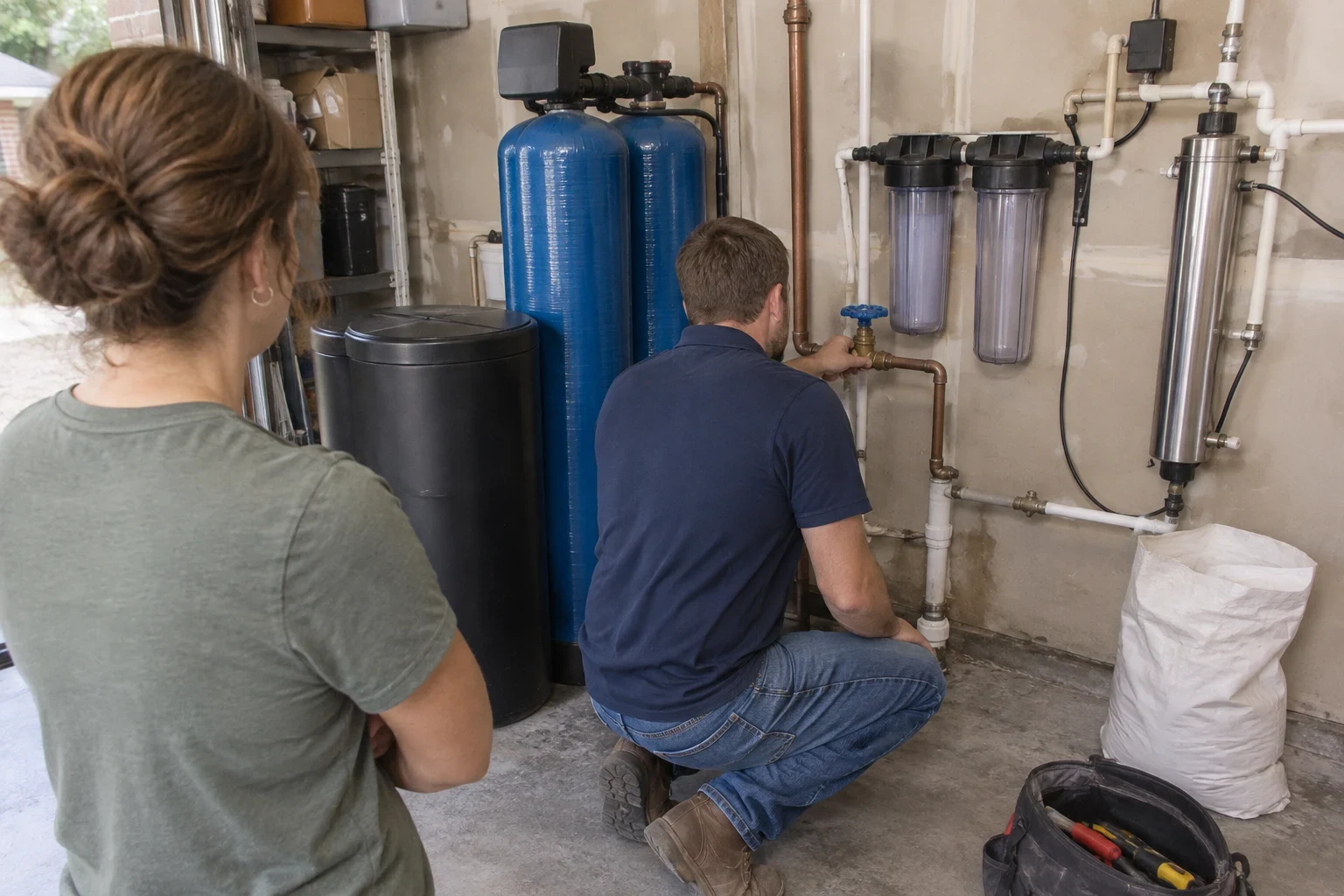
Every home is a bit different, so we price from the test results and what we see on site. Installation itself is free. Here is what moves the price of the system.
- Iron and sulfur levels
- Higher levels call for stronger oxidizing media or a larger tank. Light odor alone may need a simpler setup.
- Water pH
- Low pH water may need a correction step so the iron media works properly. We only add it if the test shows it is needed.
- Household water use
- More bathrooms and more people mean more flow, which affects tank size and valve choice.
- Condition of the plumbing
- Corroded fittings or old galvanized connections at the install point sometimes need replacing so the new system is plumbed in soundly. We point these out before work starts.
Questions about iron and sulfur
Something not covered here? (512) 852-4359
Why is the rotten-egg smell only in my hot water?
In most cases the water heater is to blame, not the supply. Its anode rod can react with the water and give off hydrogen sulfide. Swapping in a different kind of rod often clears it up, and we will let you know if that is all you need.
Can a water softener remove iron?
It can manage a little dissolved iron, but more than that clogs the resin over time. A filter made for iron usually does the job better, and your test results show which suits your water.
Might the rust come from my pipes and not the water?
It might, particularly in older homes with galvanized steel lines. When corroding pipe is the source, a filter on the main line won't fix it, so we check for that before suggesting any equipment.
What maintenance does an iron filter need?
Most oxidizing filters backwash by themselves on a timer, and certain media need refreshing now and then. On install day we go over what your system needs, so there are no surprises later.
What about the stains that are already there?
Old stains have to be cleaned off with an iron-removing cleaner, but with the system running, new ones should stop forming.
Find out what is behind the stains and smell
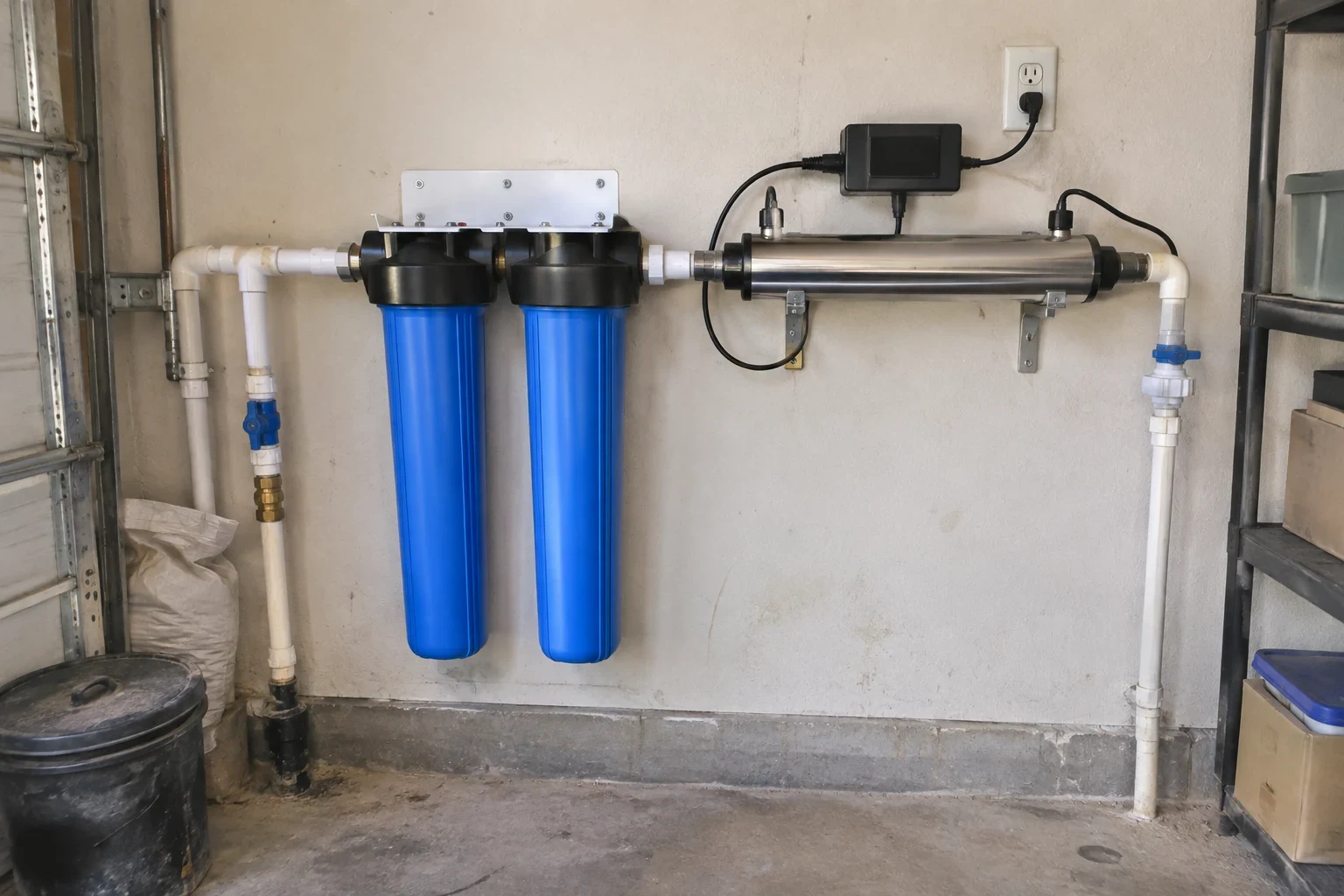
A quick test tells us whether it is the water, the pipes or the heater. Then you can decide what to do with real answers in hand.