ServicesWater Softener Installation
Water Softener Installation in Bastrop, TX
Hard water leaves crusty faucets, spotty dishes and scale inside your water heater. We test your water first. Then we install a softener sized to your household and fitted to the plumbing your home actually has, including older pipes, past repairs and odd layouts.
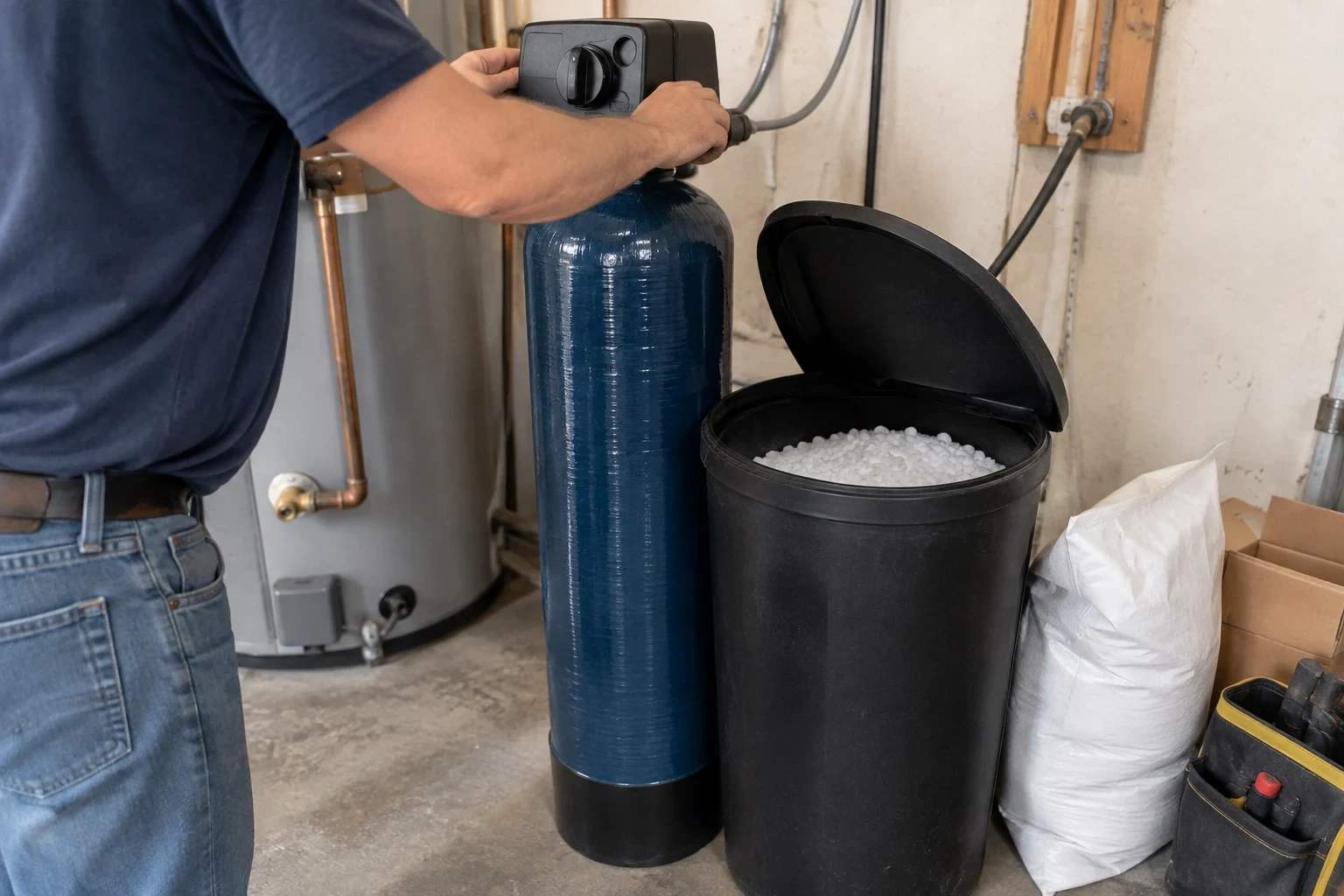
When a softener is the right call
As water flows through a tank of resin beads, a softener trades out its calcium and magnesium for sodium or potassium. That stops the white crust on fixtures, lets soap rinse off cleanly and keeps scale from building up in your pipes and water heater.
Not every house needs one. When the test shows only light hardness, or you want to avoid salt, a salt-free water conditioner may be a better match. When the complaint is taste or chlorine odor, whole-home filtration is the fix, since a softener does nothing for it. The free water test comes first so our advice lines up with your water.
Older homes bring their own quirks: galvanized pipe spliced with copper or PEX, a water heater in a closet far from any drain, a main valve no one has turned in years. We check all of it before quoting, so the plan suits your house and install day holds no surprises.
What our softener installation includes
- Hardness and iron check
- Before anything is sized, we test hardness and check for iron, which can foul softener resin. Those numbers decide the grain capacity and whether you need anything ahead of the softener.
- Sizing to your household
- We size the tank from your hardness reading and how much water your family uses. A well-sized unit regenerates on a sensible schedule and does not waste salt or water.
- Bypass valve and a clean tie-in
- We install a bypass so water can go around the softener during maintenance. Fittings are matched to your pipe material, whether that is copper, PEX, CPVC or older galvanized steel.
- Drain line done right
- The softener sends backwash water to a drain each time it regenerates. We run that line with a proper air gap to a standpipe, laundry drain or other suitable spot.
- A look at the old parts nearby
- If a shutoff is seized, a pipe section is corroded or a past repair looks shaky where we will be working, we show you photos and explain your options before touching it.
- Setup and walkthrough
- We program the control valve, load the salt and run a first regeneration. Before we go, you will know where to look to see when the brine tank needs more salt, and which way to turn the bypass if you ever need to send water around the unit.
How to tell your home might need a softener
Chalky faucets and showerheads
The white film on aerators and glass shower doors is hard-water scale, and it returns a few days after you scrub it off.
Soap that barely foams
Hard-water minerals grab onto soap before it can lather. You use more body wash, and skin and hair still feel filmy after you rinse.
Cloudy glasses and scratchy towels
Dishes leave the dishwasher with a haze, and towels feel stiff no matter how much detergent goes in.
A water heater that pops or rumbles
Those noises usually mean minerals have settled into a layer at the bottom of the tank. The burner or element has to heat through it, so it runs longer to give you the same hot water.
Low flow in an older home
In older galvanized pipe, scale and rust slowly shrink the opening. A softener slows new buildup but cannot reopen pipe that is already narrowed, and we will be straight with you about which issue you have.
What affects the price of a water softener
We offer free installation, so the price you hear is mostly about the equipment and anything your plumbing needs to receive it. Everything is written out before work starts. These are the things that move the number.
Hardness and household size
Harder water and more people call for a larger grain capacity. Bigger tanks cost more up front but regenerate less often.
Control valve type
Metered, on-demand valves cost more than simple timer valves but use less salt and water over the years.
Condition of existing plumbing
A clean copper or PEX line is simple to tie into. Corroded galvanized pipe, a seized shutoff or an old repair that will not hold a new fitting may need replacing first.
Location and drain access
A garage with a drain and outlet close by is straightforward. A closet install or a long drain run takes more time and material.
Pre-treatment needs
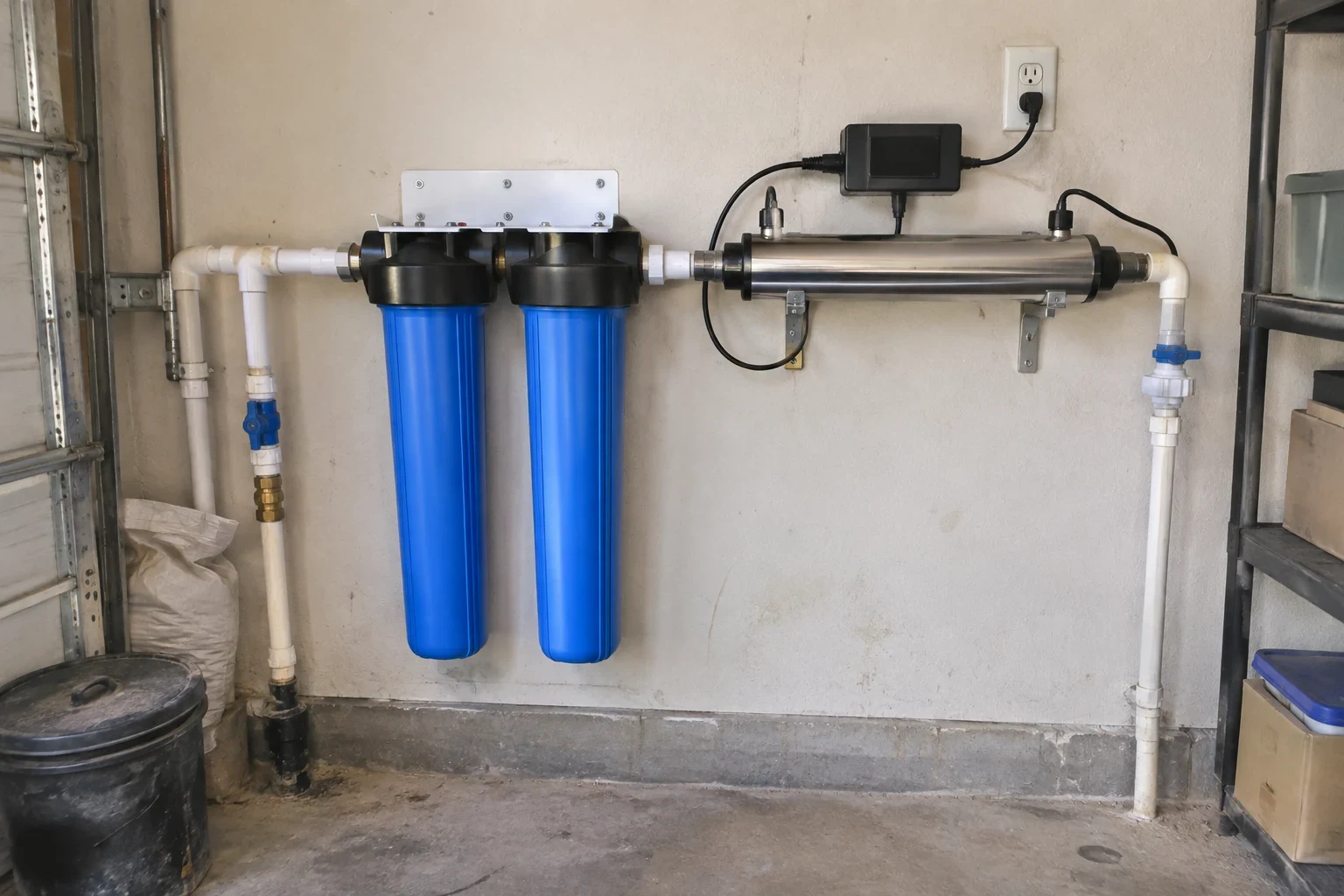
If your test shows iron or heavy sediment, a filter ahead of the softener protects the resin. Our iron and sulfur removal page explains that equipment.
How install day goes
- 1
Free water test
We test your water at your home and talk through what the numbers mean. If a softener is not the best fit, we say so.
- 2
A look at your plumbing
We find the main line, the shutoff, a drain and an outlet, and note any old repairs or worn parts. You get your quote by phone or in person, with the equipment and any extra plumbing work spelled out.
- 3
Installation
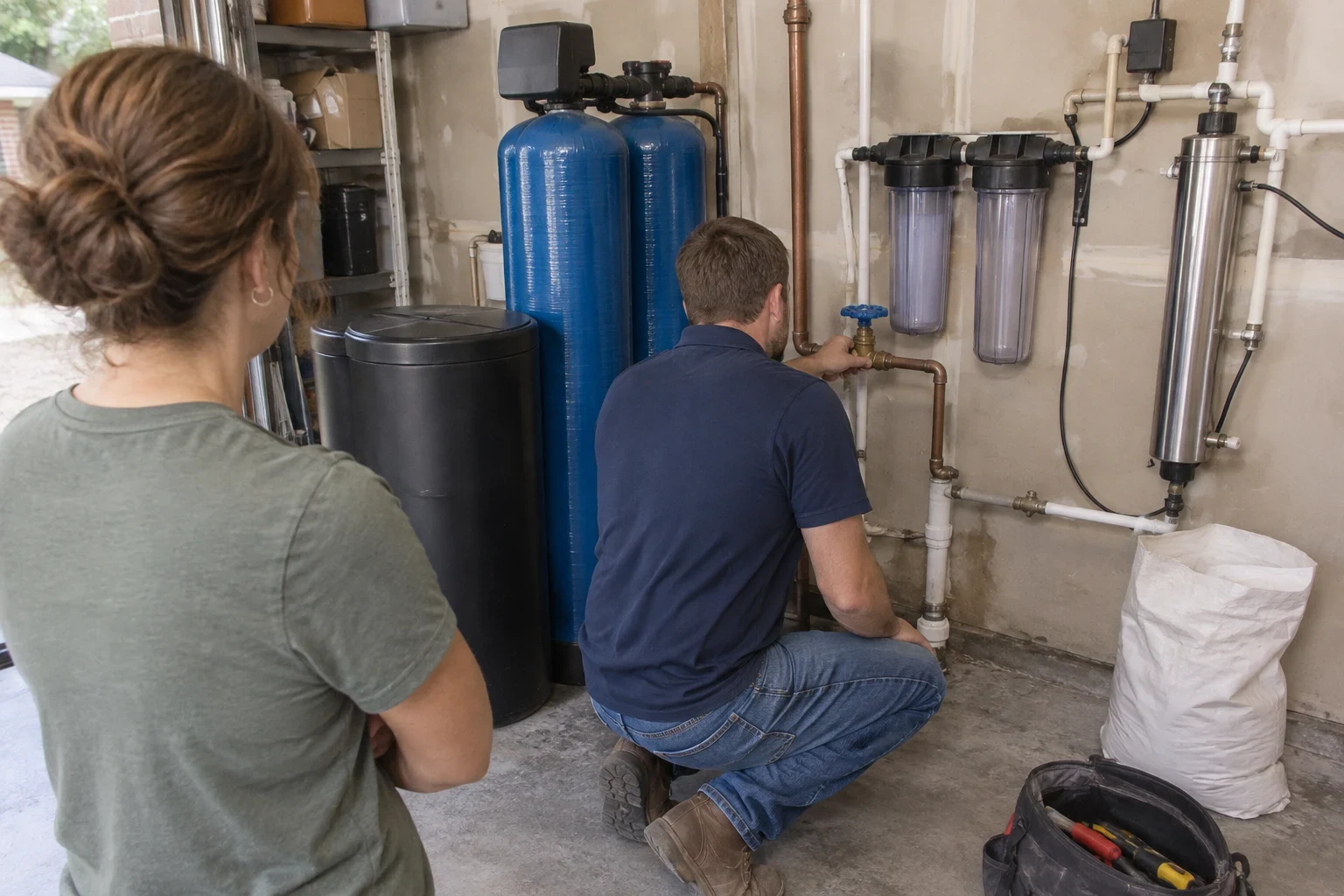
We lay down protection where we work, shut off the water, cut in the bypass and softener, and run the drain line. Your water is off only while we make the connections.
- 4
Startup and cleanup
We flush the lines, check every joint for leaks, run a regeneration and haul away the packaging. Before we leave, you will know how to add salt and what the controls do.
Common softener questions
Do I need a water test before getting a softener?
We strongly suggest one, and it is free. Hardness varies from house to house, and that reading decides the system size. The test also catches iron and other issues that would wear the resin out early.
Will a softener fix the pipes in an older home?
No. It stops new scale from forming, but it will not remove heavy buildup or rust already inside old galvanized pipe. If worn pipe is causing your low pressure, we tell you that instead of selling equipment that will not help.
Is it safe for my family to drink softened water?
For most homes, yes. The resin trades hardness minerals for a little sodium that few people can taste. If someone in the house is limiting sodium, the brine tank can take potassium chloride, or a reverse osmosis system at the kitchen sink can supply drinking and cooking water.
What sets a softener apart from a salt-free conditioner?
A softener removes calcium and magnesium. A salt-free conditioner keeps those minerals in the water but changes them so they scale less. Softeners do more for soap and spotting, while conditioners need no salt and no drain. Your test results point to the better fit.
How much maintenance does a softener take?
Mostly keeping salt in the brine tank, so look at it roughly once a month. Every few years, get the brine tank cleaned and the settings checked. We go over everything before we leave.
Do you install softeners outside Bastrop?
Yes. We also cover nearby towns such as Elgin, Smithville and Cedar Creek. Let us know your town when you call and we will schedule your free water test.
Find out what is in your water first
A free water test tells us whether a softener makes sense for your home and what size it should be. Installation is free, and you will have a clear quote before we start.