ServicesSalt-Free Water Conditioners
Bastrop Salt-Free Water Conditioners
Our salt-free conditioners stop hardness minerals from coating your pipes, water heater and fixtures. There are no salt bags, no brine and no drain line, a good match for older homes with no drain close by. Testing your water comes first, so you know it suits your home.
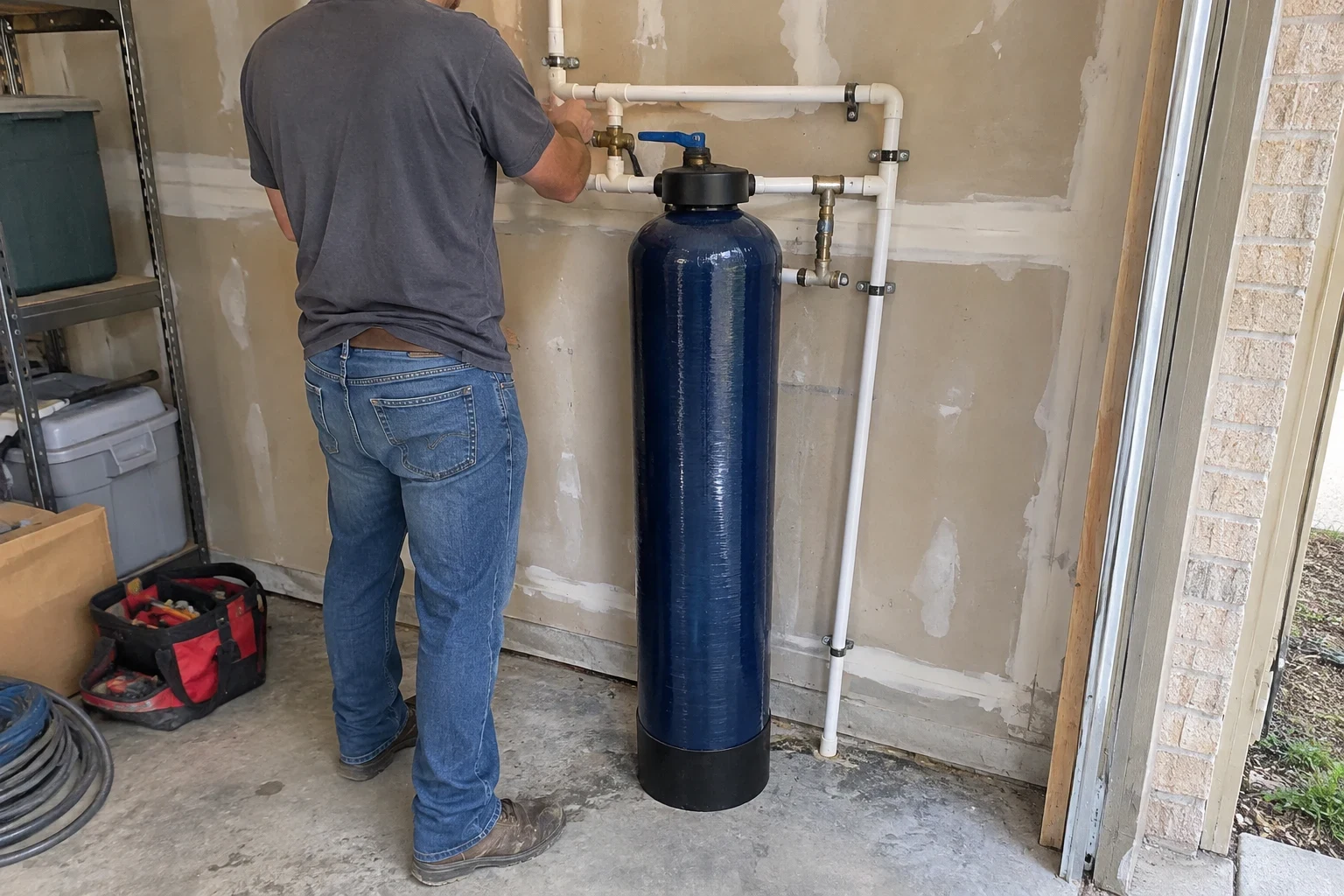
Keeping scale away, no salt required
Unlike a softener, a salt-free conditioner does not strip calcium and magnesium out of the water. The usual design uses a media that changes those minerals into very small crystals that ride along in the water rather than crusting inside your water heater, aerators and showerheads. Because the minerals remain, the water tastes the same and no salt is sent down the drain.
So it fits some houses well and others poorly. If protecting your plumbing and appliances is the main goal, and you would like to skip hauling salt or making room for a brine tank, a conditioner deserves a look. If you are after slippery-soft water, thicker lather and spot-free glass, a standard softener does that job better, and we will say so.
Older houses bring some extra twists: often no floor drain near the spot where the main line comes in, pipes of different materials from past fixes, or a water heater holding years of sediment. Since a conditioner needs neither a drain nor an outlet, it can often go where a softener would call for added plumbing.
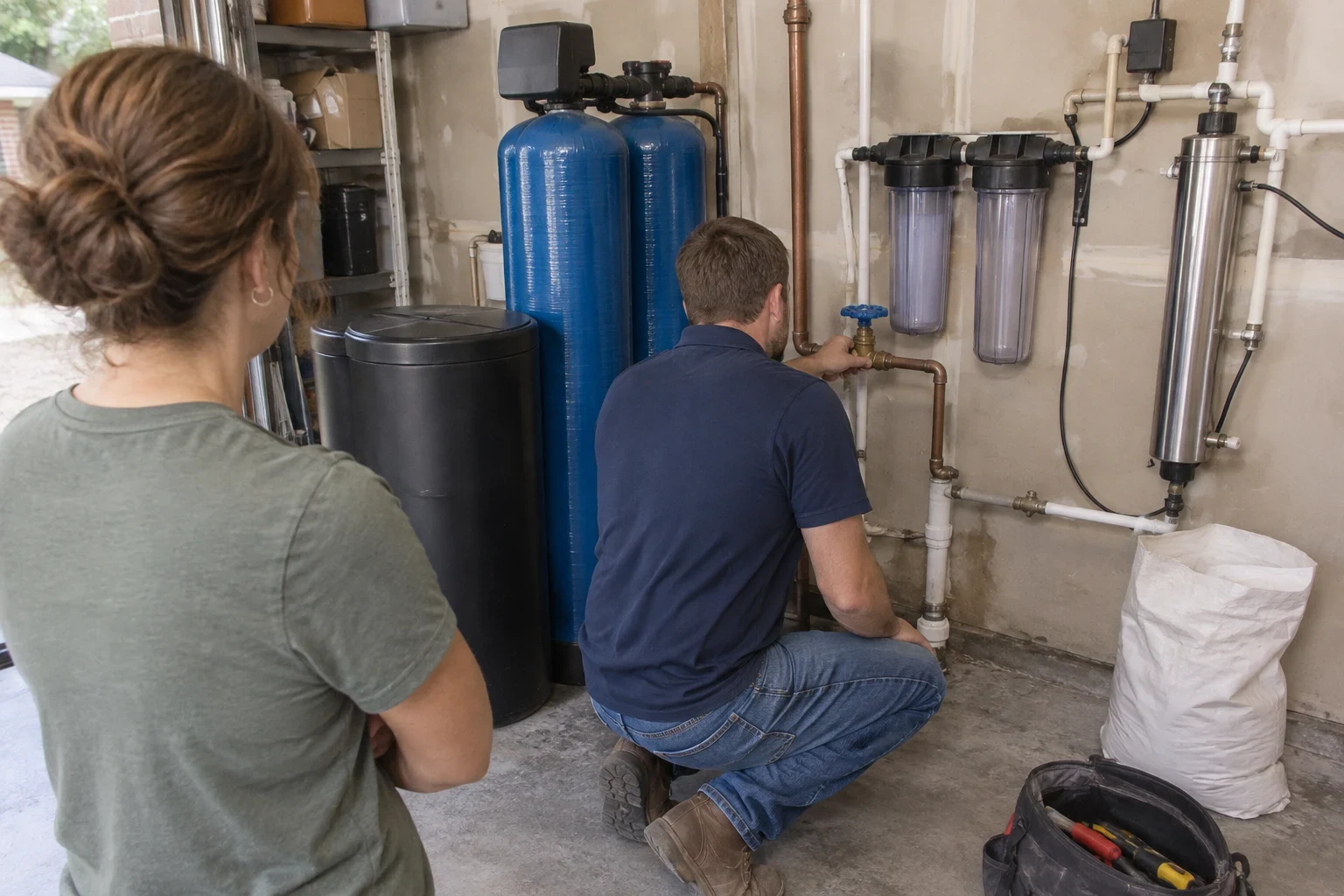
What your installation includes
- 01
A water test first
We check hardness, iron, chlorine and pH before recommending anything. Iron and high chlorine can coat conditioner media and shorten its life, so we need to know what is in your water before we size the system.
- 02
A look at your existing plumbing
We note the pipe material at the main line, any old patches or mismatched fittings, and your water pressure. In older houses this is where surprises hide, and we would rather find them before install day than during it.
- 03
Sizing for your household
Conditioners are sized by flow rate. We match the tank to the number of bathrooms and how your family uses water so you do not feel a pressure drop in the shower.
- 04
Pre-filter when it is needed
If your test shows sediment or chlorine, we may pair the conditioner with a sediment or carbon stage to protect the media. We explain why, and you decide.
- 05
Bypass valve and clean tie-in
Every system goes in with a bypass so the water can be routed around it for service. We tie into the main line with fittings that suit the pipe you have.
- 06
Free installation
Free installation comes with every system. Your quote lists the conditioner and any added parts, and the labor to tie it in is not billed on top.
Questions about Salt-Free Water Conditioners?
Call(512) 852-4359How to tell a conditioner might help
Chalky buildup on fixtures
White deposits on faucets, showerheads and the dishwasher door mean hardness minerals are dropping out of your water.
Popping from the water heater
Rumbling or popping usually comes from scale and sediment collected at the base of the tank. A conditioner cannot reverse years of buildup, but it does slow new scale.
One faucet with weak flow
Aerators and showerheads that keep clogging and need regular soaking are a typical scale problem. In older houses we also check whether worn galvanized pipe plays a part.
Nowhere good to put a softener
When there is no drain or outlet near the main line, or you just do not want to buy and lift salt, a salt-free system needs neither.
A family member limits sodium
A softener puts a little sodium in the water. A conditioner puts in none, which some households prefer.
How the job goes
- 1
Your call and free test
Once you call, we pick a visit time that works for you and test the water right from your tap. We walk you through the results in plain terms and give you an honest answer on whether a conditioner, a softener or nothing at all makes sense.
- 2
A clear quote
If a conditioner fits, we give you a quote that lists the system, any pre-filter and any plumbing changes your pipes might need. Nothing gets added later without your say.
- 3
Install day
We shut off the water, protect the floor where we work and tie the system into your main line. Most homes are only without water for part of the visit.
- 4
Flush, check and walk-through
We flush the system, check every connection for leaks and confirm your pressure afterward. Then we show you the bypass valve and explain when the media or any pre-filter will need attention, and we take the packaging with us.
What affects the price
No two installations cost exactly the same, because houses and water differ. Installation is free, so most of the price comes from the equipment and any extra parts your plumbing needs. Your quote by phone or after the test will spell out each piece.
- System size
- A larger home with more bathrooms needs a higher flow rate and a bigger tank, which costs more than a compact unit for a smaller house.
- Your water's makeup
- High iron, sediment or chlorine may call for a pre-filter to protect the conditioner media, which adds a stage to the system.
- Condition of older plumbing
- Corroded fittings, old galvanized sections or a tight spot at the main line can mean extra parts to make a sound connection.
- Pairing with other treatment
- Some families add whole-home filtration for chlorine taste or a reverse osmosis system for drinking water at the same time. Combining them changes the total.
What people ask about salt-free conditioners
Does a salt-free conditioner do the same thing as a softener?
It does not. A softener pulls hardness minerals out with salt and a brine tank. A conditioner keeps the minerals in the water but alters them so they rarely cling as scale. If soft-feeling water and better lather are your priority, go with a softener.
Does it clear out scale my pipes and water heater already have?
Better not to expect that. Some homeowners see old buildup soften gradually, but thick scale in a long-running water heater generally means flushing or replacing it. What the conditioner really does is stop new scale from forming.
Will water spots still show up on dishes and shower glass?
They can. The minerals are still present, so spots may form where water dries. They usually wipe away more easily than hard-water crust, but a conditioner will not leave glass spotless.
What maintenance does it take?
Hardly any. You add no salt, it has no regeneration cycle and it typically needs no power. The media lasts several years depending on your water and use, and a pre-filter cartridge, if you have one, gets changed on a set schedule that we cover at install.
Does it reduce water pressure?
A properly sized unit should not cause a drop you notice. Homes with older pipe sometimes start out with low pressure, so we take a reading before and after and you can compare them yourself.
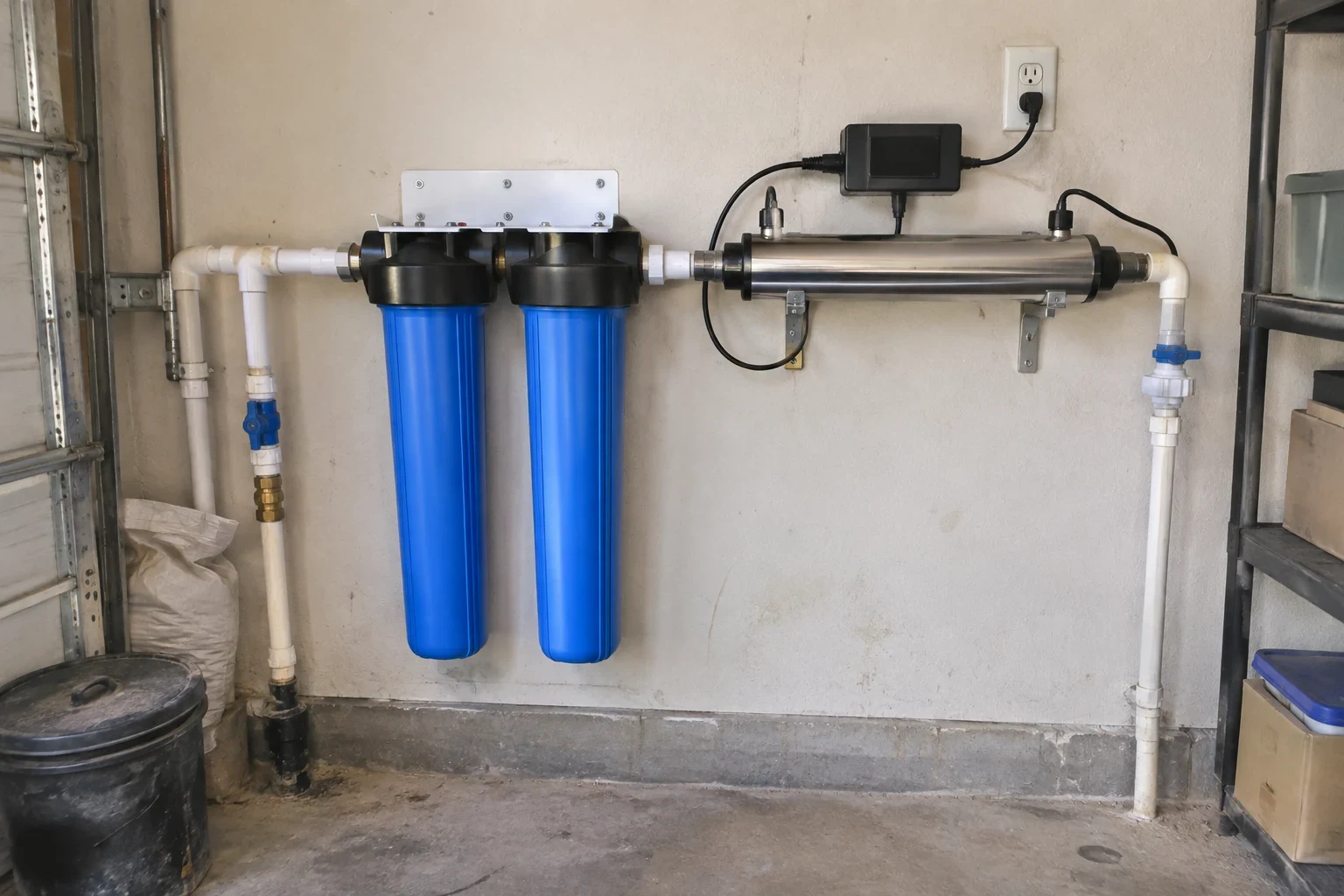
See whether salt-free suits your water
Testing comes first, and then you get an honest answer. When a conditioner is a good fit, we install it for free.